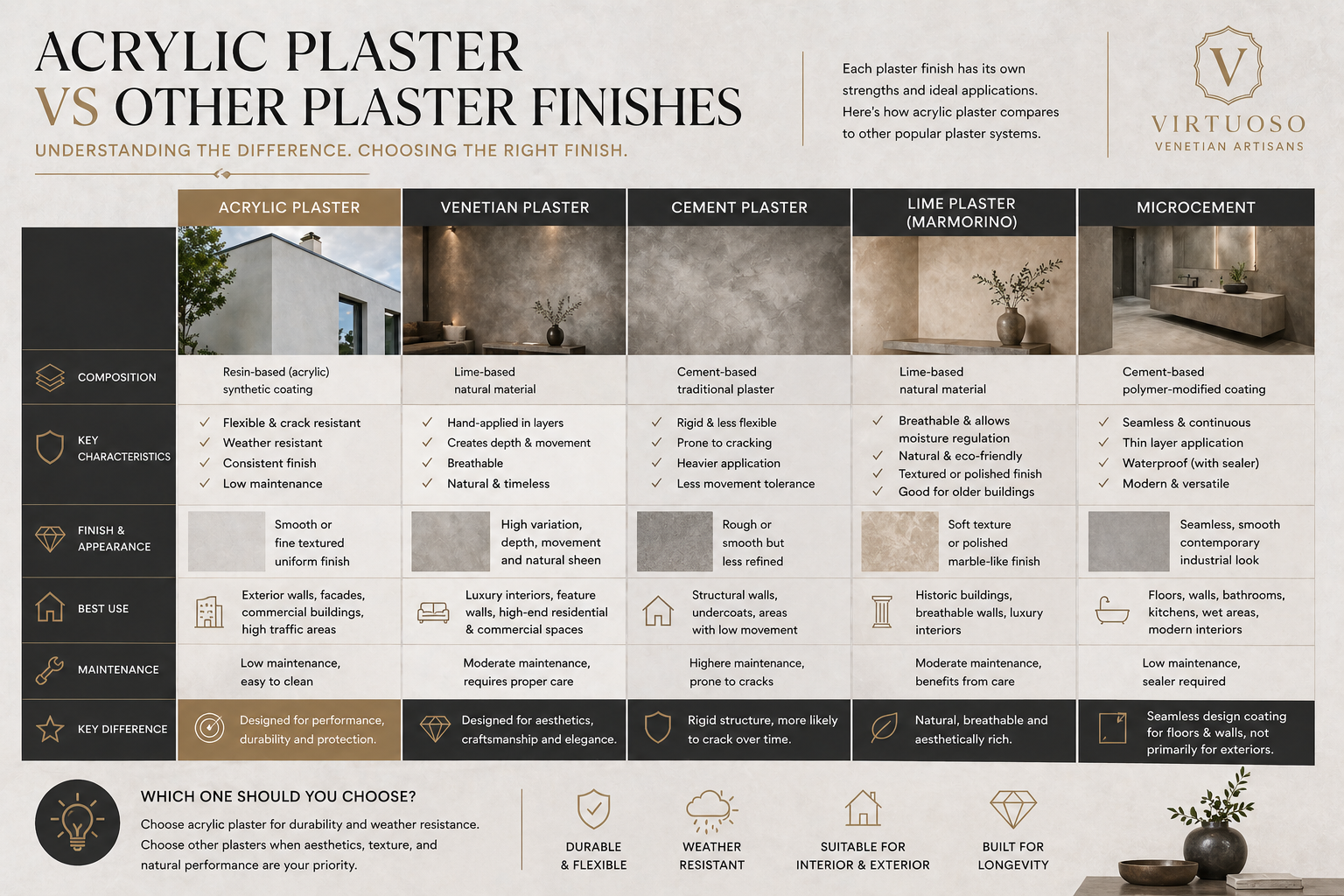
Acrylic Plaster vs Other Plaster Finishes: What’s the Difference?
When choosing a surface finish, understanding the differences between materials is key. Acrylic plaster, Venetian plaster, and other traditional systems all offer unique benefits, but they serve very different purposes.
So how does acrylic plaster compare, and which one is right for your project?
What Is Acrylic Plaster?
Acrylic plaster is a resin-based coating designed for durability and flexibility. It is commonly used for both interior and exterior surfaces, particularly where resistance to weather and movement is important.
Its synthetic composition allows it to perform well in demanding environments.
Acrylic Plaster vs Venetian Plaster
Acrylic Plaster
- Resin-based material
- Flexible and crack resistant
- Consistent, uniform finish
- Ideal for external and functional applications
Venetian Plaster
- Lime-based, natural material
- Hand-applied in layers
- Creates depth, movement, and texture
- Used for high-end decorative finishes
👉 Key Difference:
Acrylic plaster is designed for performance, while Venetian plaster is designed for aesthetics and craftsmanship.
Acrylic Plaster vs Cement Plaster
Acrylic Plaster
- More flexible
- Less prone to cracking
- Better weather resistance
Cement Plaster
- Rigid structure
- More likely to crack over time
- Heavier and less adaptable
👉 Key Difference:
Acrylic plaster moves with the building, while cement plaster is more rigid and prone to stress cracking.
Acrylic Plaster vs Lime Plaster (Marmorino)
Acrylic Plaster
- Synthetic and non-breathable
- Smooth and consistent finish
- Low maintenance
Lime Plaster (Marmorino)
- Natural and breathable
- Textured or polished appearance
- Allows moisture regulation
👉 Key Difference:
Acrylic plaster focuses on durability and uniformity, while lime plaster offers natural performance and aesthetic depth.
Acrylic Plaster vs Microcement
Acrylic Plaster
- Primarily used on walls and facades
- Slightly textured or smooth coatings
- Designed for protection and finish
Microcement
- Seamless coating system
- Used on floors, walls, and wet areas
- Decorative and modern aesthetic
👉 Key Difference:
Microcement is a seamless design solution, while acrylic plaster is more of a protective and practical coating.
Where Acrylic Plaster Works Best
Acrylic plaster is best suited for:
- External walls and facades
- Commercial buildings
- High traffic environments
- Areas exposed to weather or movement
It provides a clean, durable finish where performance is the priority.
When to Choose Other Plasters
You may want to consider alternative finishes when:
- You are creating a feature wall or luxury interior
- You want depth, texture, or movement
- You are aiming for a high-end, bespoke finish
In these cases, Venetian plaster or Marmorino may be the better option.
Conclusion
Acrylic plaster is a strong, reliable material designed for durability, flexibility, and performance. It excels in environments where resistance to weather and wear is essential.
However, it serves a different purpose compared to decorative finishes such as Venetian plaster or Marmorino, which focus on aesthetics and craftsmanship.
Understanding these differences allows you to choose the right material for your project — whether that is a practical external finish or a high-end interior surface.